

VR Arcades Have a Weekday Problem. Schools and Corporations Might Be the Fix
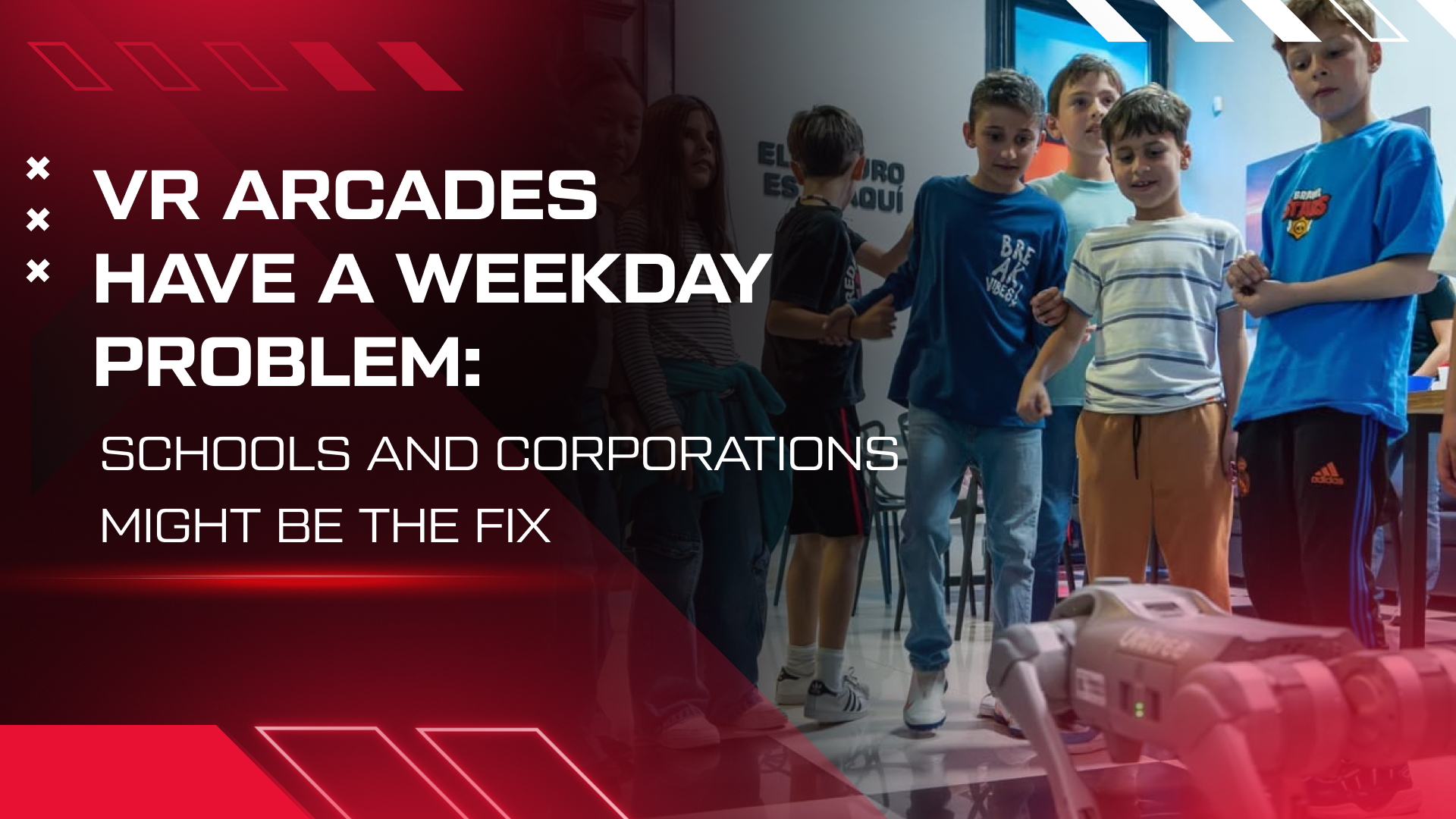
On a Saturday night, a free-roam VR arena looks like the future of entertainment. On a Tuesday morning, it often looks like a bad investment.
Rows of headsets hang motionless. The tracking cameras are on, the staff is on payroll, the rent ticks by — and no one is playing. Location-based VR (LBVR) centers, from mall arcades to full-scale “VR stadiums”, live in this split reality: sold-out weekends and painfully empty weekdays.
So some operators started to treat weekdays not as “slow B2C days” but as a completely different business:Innovative VR Solutions for Schools and Businesses. Think physics lessons inside a virtual particle accelerator at 10 a.m., and a 50-person team-building battle at 3 p.m., in the same arena that will host birthday parties on Saturday.
One of the early adopters of this strategy is VR Arena, a network of free-roam VR clubs. Their experience shows what happens when you stop hoping for random walk-ins — and start selling Tuesday mornings as a product.
The Weekday Problem: When the Future Isn’t Fully Booked
Ask any VR arcade owner a simple question — “How full are you on a random Wednesday at 11 a.m.?” — and you’ll likely get the same answer: “Not enough.”
The basic unit economics are brutal:
- Rent and equipment costs don’t care what day of the week it is.
- Weekend peaks can’t fully offset five days of under-utilized hardware.
- Discounting tickets for walk-in customers on weekdays rarely solves it; you just train people to wait for cheaper slots.
The pattern is familiar to bowling alleys, climbing gyms, and trampoline parks. The difference is that VR arcades are more capital-intensive. You’re not just paying for space and foam; you’re paying for networked PCs, headsets, tracking systems, and live content updates.
For location-based VR to survive past the hype cycle, weekday usage has to stop being an afterthought.
How Tuesday Became a Product: A Corporate Approach Instead of Mass Discounting
VR Arena’s insight was disarmingly simple: weekday slots are an enterprise solution.
Instead of waiting for random players, they started deliberately selling to:
- Schools and educational institutions — as “VR lessons” and field trips.
- Corporate clients — as team-building, offsites, and private events.
That sounds obvious. The non-obvious part is how you do it so it becomes a repeatable engine, not a one-off lucky deal.
The first step was organizational, not technological: creating a dedicated position for corporate sales.
If your game master is also your weekday sales rep, you don’t have a sales strategy.
You have a tired game master with a spreadsheet.
A corporate sales manager at a VR arena lives in a completely different world than the cashier at the desk. He’s building a pipeline, not a queue.
Typical responsibilities:
- Prospecting schools, HR departments, event agencies.
- Packaging experiences into “products” (VR lessons, tournaments, corporate retreats).
- Handling contracts, invoices, and logistics for large groups.
- Tracking repeat business and referrals.
Once that function exists, weekday mornings and afternoons become inventory to sell, not empty slots to pray about.
VR for Schools: Field Trips Inside the Headset
From the outside, “VR for education” sounds like vaporware. Inside the arena, it looks more like logistics and psychology.
Schools don’t care about your rendering pipeline. They care about:
- Safety.
- Clear educational value.
- Price per student.
- How much paperwork the field trip generates.
VR Arena and similar operators found that what works is not promising a revolution in pedagogy, but offering something very concrete:
What “VR Lessons” Actually Look Like
For a typical middle or high school:
- Subject-linked programs:
- History: walking through ancient cities, battles, or landmarks.
- Physics: visualizing abstract concepts like gravity or electromagnetism.
- Biology: exploring the human body at 1:10,000 scale.
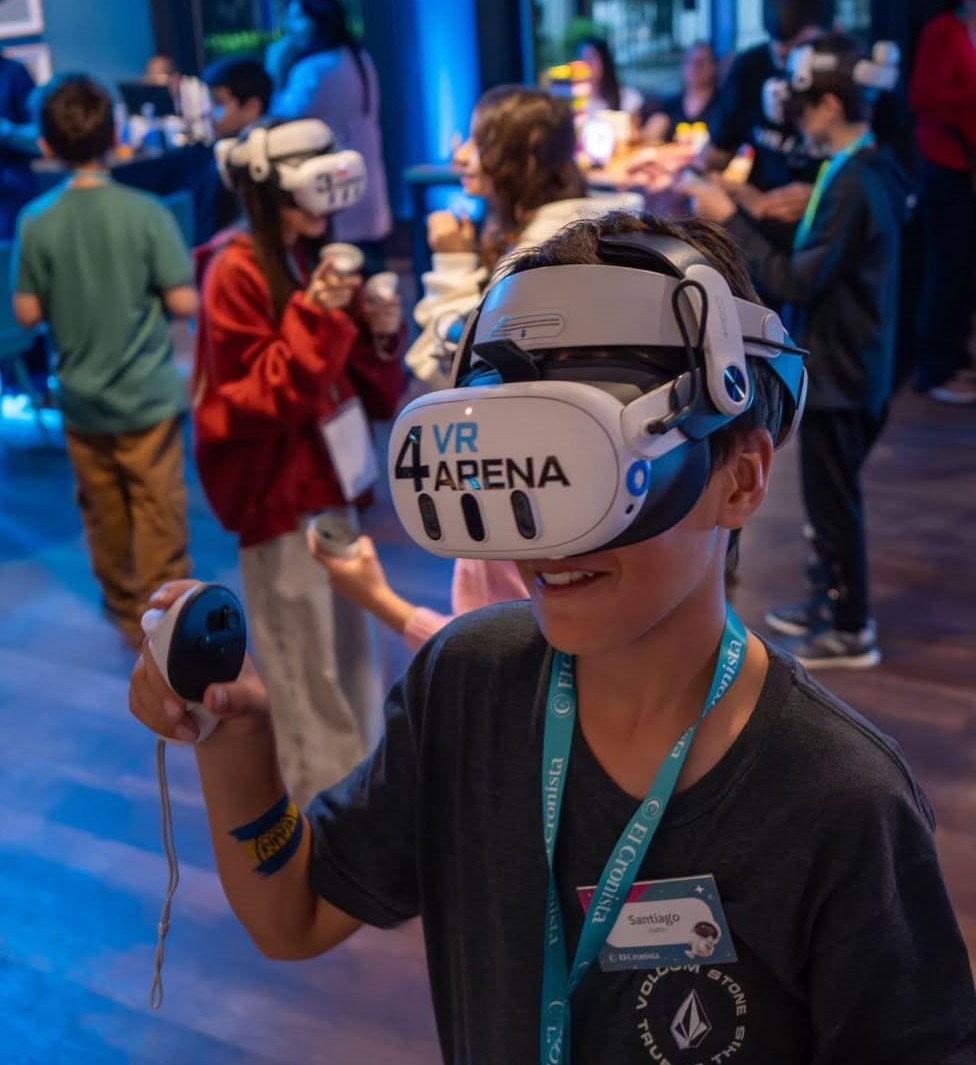
- Class-length sessions of 45–60 minutes, with clear start/end times.
- Group formats: rotating students through the arena in small teams while others work with a teacher on related tasks.
The key isn’t the content alone — it’s how it slots into a school’s real day.
Who You Actually Talk To
In theory, “schools” are an institution. In practice, corporate VR sales to schools:
- One enthusiastic subject teacher who wants something new for their class.
- One pragmatic principal or deputy who needs it to look like education, not a party.
- Sometimes a parent committee who co-funds the visit.
Successful arenas learned to bring methodological materials to the table: printable worksheets, teacher guides, even suggestions on how to tie the VR session to curriculum standards. Not because VR needs that to work — but because schools need it to say yes.
And there’s a cynical but important detail: weekday pricing.
Offer lower rates for 10 a.m. Tuesday than for Saturday afternoon, and suddenly what used to be dead time turns into a budget-friendly “digital field trip”.
Corporate VR: Team-Building in a Shared Virtual Body
If schools fill the mornings, corporate clients fill the afternoons.
HR departments and team leads are constantly hunting for something that isn’t just another bar night or escape room. VR offers something they can’t easily get elsewhere:
- Everyone shares the same virtual body language — headsets on, controllers in hand, hierarchy temporarily flattened.
- Team members who barely talk in the office end up coordinating under pressure in a co-op scenario.
- It’s naturally photo- and story-worthy: people love posting about “that weird VR thing our company did”.
What Corporates Actually Buy
The packages that tend to work are not named “Session #3”. They sound like this:
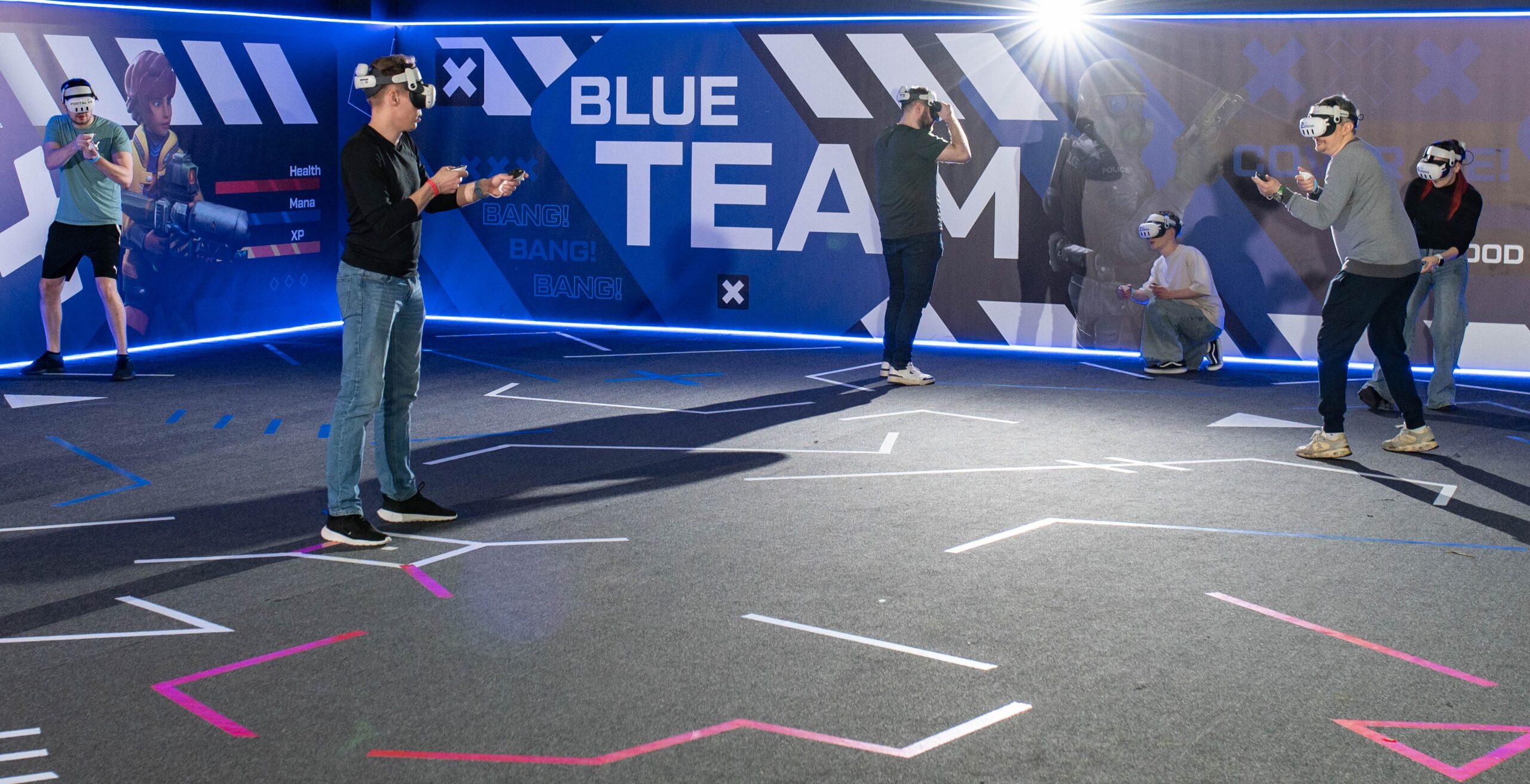
- “VR Battle for the Department Cup” – a tournament between teams, with a bracket, scoreboard, and small prizes.
- “Tech Offsite in VR” – several hours of play plus space for presentations, coffee, or pizza.
- “New Hires vs Old Guard” – an onboarding twist that mixes HR’s practical needs with a shared experience.
From VR Arena’s perspective, corporate sales are about solving HR departments’ problems:
- “We need a 2-hour program for 40 people with mixed physical ability.”
- “We need it on Thursday at 16:00 and we can’t go too far from the office.”
- “We need an invoice and a contract and no surprises.”
Weekdays become an asset: it’s much easier to promise full venue exclusivity on a Wednesday afternoon than on a Saturday night.
The Economics: Filling the Grid
Behind the sci-fi aesthetics lies a very mundane story: resource optimization.
If you map a typical VR arena’s bookings over a week, you get:
- Spikes on Friday evening and weekends.
- Troughs from Monday to Thursday, especially before 17:00.
Every hour your expensive hardware sits idle is lost value.
Every corporate booking that lands in those troughs effectively:
- Raises your overall monthly utilization.
- Lowers the average cost per played minute.
- Stabilizes cash flow with pre-booked events instead of last-minute ticket sales.
With a functioning corporate sales system, it’s realistic to transform weekday occupancy from “painfully quiet” to “predictably busy” — not necessarily fully booked, but enough to make the graph look less like a heartbeat and more like a plateau.
Designing a VR Arena Ready for Corporate Sales
There’s a physical side to all this. A VR arena built only for small groups of friends might not be ready to host a 60-person company.
Things that matter more than you’d think:
- Capacity and flow:
Can you run two school classes or two departments in parallel without chaos? - Non-VR zones:
Space for buffet tables, presentations, or just people waiting their turn. - Sound and lighting controls:
Corporate clients may want less “neon rave”, more “we can actually talk here”. - Check-in and briefings:
Can you onboard 30–50 people in a way that feels organized and safe?
When VR Arena opened newer, larger locations, they didn’t just add more square meters. They designed for simultaneous events, like two birthday parties or a corporate plus a separate B2C flow. That’s what makes high weekday occupancy physically possible.
Friction Points: Parents, HR, Motion Sickness
Any corporate sales story that sounds too smooth is probably hiding the friction.
Schools worry about:
- Age restrictions and violent content.
- Health risks, from motion sickness to eye strain.
- Perception: is this really “education” or just a fancy arcade trip?
Corporations worry about:
- People who don’t want to wear a headset for personal or medical reasons.
- Accessibility for employees with different physical abilities.
- Liability and safety during active movement.
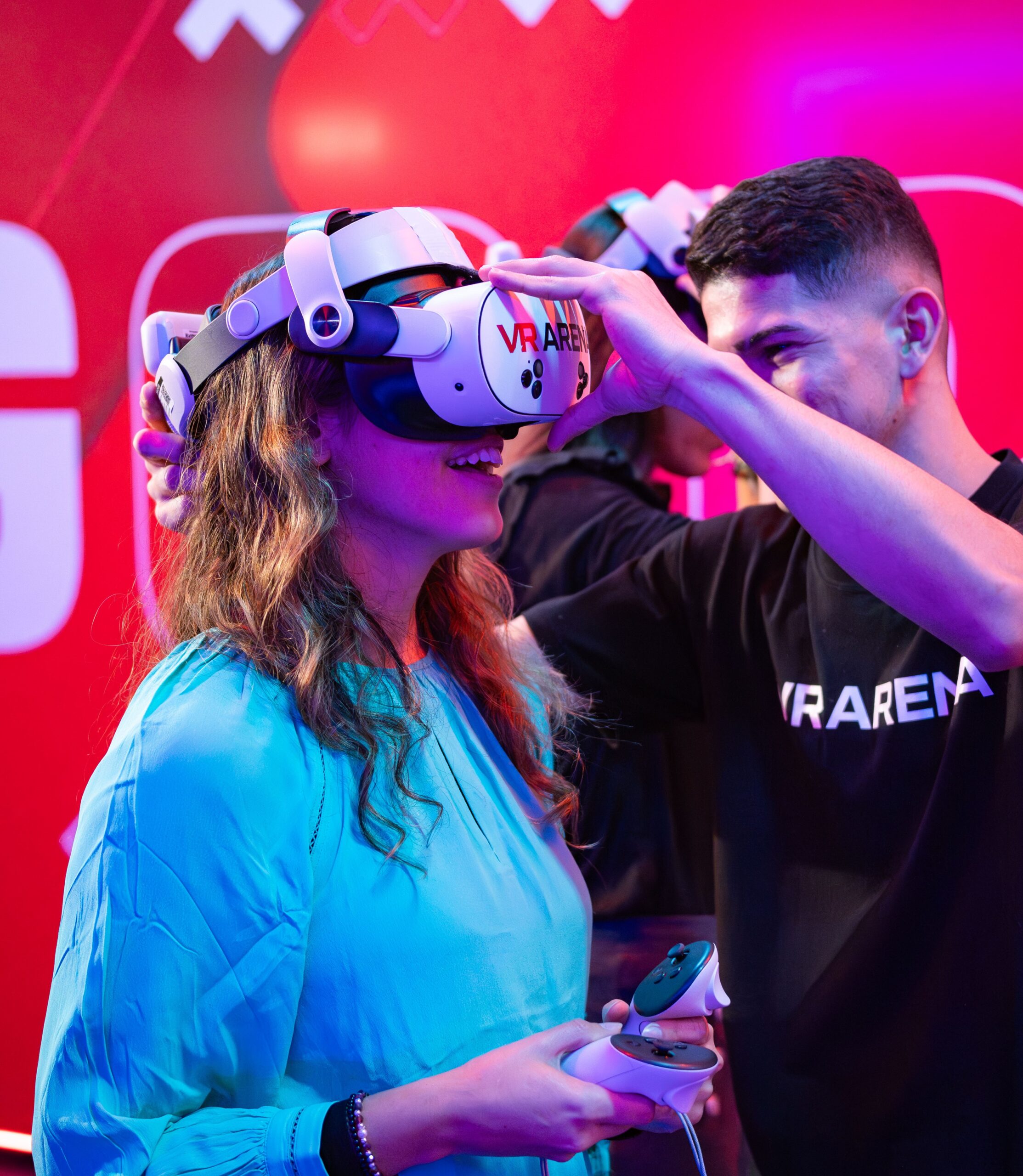
The operators who succeed in corporate sales are usually brutally clear about:
- Content ratings and game modes used for children or mixed groups.
- Alternatives for those who can’t or don’t want to play.
- Safety briefings, waiver forms, and staff supervision.
It’s not as glamorous as talking about the metaverse.
But it’s exactly what pushes school principals and HR directors from “interesting” to “approved”.
The Bigger Picture: From Arcade to Hybrid Infrastructure
If you zoom out, corporate sales on weekdays are not just about filling Tuesday. They’re about what a VR arena is.
- On weekends, it’s an entertainment venue and birthday factory.
- On weekday mornings, it’s a digital field-trip hub.
- On weekday afternoons, it’s a soft-skills gym for corporate teams.
If that sounds like three different businesses sharing the same space — это и есть идея. The same free-roam tracking grid and content pipeline becomes:
- Part of the edtech landscape.
- Part of the HR / L&D toolkit.
- Part of the location-based entertainment industry.
For a certain class of VR arcades, sales to schools and corporations are not a side hustle.They’re a hedge against the volatility of consumer trends — and a path to making sure your futuristic room full of headsets is actually used five days a week, not just two.
And if you walk into a VR arena at 10 a.m. on a random Wednesday and see a full class of eighth-graders yelling inside their headsets while their teacher takes notes — that’s what the future of “weekday load” looks like. Not a discount on tickets, but a completely different customer.

