

Is It Worth Opening a VR Club in 2026?

In 2026, many people are thinking about whether it’s worth starting their own business—especially after several unstable years. The economy is going through a transformation, and new niches are emerging. Of course, reforms and changes create anxiety for entrepreneurs (almost half of respondents expect negative effects).
At the same time, experts suggest that the global economy will avoid a recession and continue moderate growth in 2026. Everything depends on choosing the right field: if the industry is перспективна, then the answer to the question “Is it worth opening a business in 2026?” is a clear “yes.”
What business should you open in 2026?
What kind of business can you start in 2026 that will be profitable? Analysts note explosive growth in technology industries and changing consumer preferences. Demand is rising for digital services, eco-friendly products, and new leisure formats. If you’re considering what business is best to open in 2026, look at areas where demand is outpacing supply.
One of these areas is the VR industry. Virtual reality combines entertainment and technology trends, attracts a wide audience, and is rapidly gaining popularity. This means that a VR club—aligned with modern interests—can be exactly the kind of business worth opening in 2026.

The VR industry: facts and outlook for 2026
Here are a few facts in favor of building a business in virtual reality:
1. VR clubs let people experience what’s impossible in real life
For example, becoming an astronaut, exploring ocean depths, or feeling like a superhero. And this entertainment isn’t only for children—this unique experience captivates people of all ages. It’s no surprise that VR has moved beyond a niche fantasy and become a powerful market. As of early 2025, there are around 800 VR clubs in Russia—several times more than a couple of years ago. The reason for this growth is steady demand and the decreasing cost of VR equipment. Technology is improving, headsets are becoming more affordable, and that makes it easier to launch new venues.
2. The global VR market is expanding rapidly
Analysts forecast annual industry growth in the tens of percent. If these projections hold, by 2026 the global virtual reality market will exceed $50–56 billion. Separately, they note the recovery of out-of-home VR entertainment: after the pandemic-related decline, interest in VR attractions and clubs is rising again. Investments by tech giants (Apple, Sony, and others) are also fueling this space. For entrepreneurs, this means demand for VR services is likely to remain high going forward.
3. VR businesses have diverse audiences and multiple revenue streams
Virtual games and quests attract gamers and young people; family programs draw parents with children; team VR missions appeal to corporate clients for team-building. In practice, a VR club can offer entertainment for visitors of any gender, age, and social group, which broadens the market. VR arenas host birthdays, corporate events, and even educational programs—this format has become mainstream. Because of this, a VR club’s income can come from multiple sources: one-time visits, turnkey parties, off-site shows, memberships, and more. This multi-format approach increases business profitability. It’s no coincidence that VR clubs are considered highly profitable, and with a well-designed model, payback can be relatively fast.
Let’s also look at real examples. Entrepreneurs who have already opened VR clubs share impressive results. A small VR club can recoup its investment in less than a year and reach net profit.
For instance, one of the first VR locations in Yekaterinburg recovered its initial 700,000 ₽ in under 12 months and generated around 2.5 million ₽ in profit the following year. Large VR arenas can produce even more. According to franchise case studies, top virtual reality park locations report monthly revenue above 4–9 million ₽, and net profit can reach 2 million ₽ or more. Of course, these results require a stable customer flow.
Even mid-sized clubs, however, often earn hundreds of thousands of rubles in monthly profit.
Your own VR club or a franchise: what should you choose?
Let’s say you’ve decided that a VR club is a promising idea. The next question is: should you open under a franchise or build the project independently? In virtual reality, this choice is especially relevant.
If you start from scratch, you get full freedom—but you also take on all the risks and tasks: from buying equipment and sourcing content to building a brand from zero. Virtual reality is a technologically complex industry, and beginners have to understand dozens of nuances.
An independent VR club requires finding high-quality games (especially multiplayer titles), hiring and training technical staff, and designing marketing to attract an audience. All of this slows down the launch and can be expensive. It’s not surprising that most VR clubs in Russia open as franchises—this way, entrepreneurs immediately get access to ready-made content and established business processes.
A VR club franchise offers several clear advantages:
Brand recognition and marketing support
Starting under a recognizable name is easier than earning trust from scratch. Thanks to franchise brand awareness and advertising support, customer flow is secured from the first days. You save on promotion—part of the marketing is handled by the franchisor.
Ready-made content and technology
As a rule, VR club networks have their own libraries of games and scenarios; some develop unique VR games for their platform. The franchisee gets access to these assets, solving the content problem. For example, it’s noted that independent clubs sometimes even had to create games themselves—so working under a large network is significantly more efficient.
A proven business model
You get tested service standards, optimal pricing strategies, and ready operational workflows. Essentially, a franchise is a turnkey business with an already calculated unit economics. According to industry statistics, franchise VR locations generate on average about 20% more revenue than standalone startups due to scale effects and network experience. Leading players also show fast payback: for example, one of the largest VR networks reports an average payback period of around 10 months with profitability of 25–40%.
Operational and technical support
The franchisor trains your staff to work with VR equipment, advises on choosing a location, and helps launch advertising. During operations, you’re not left alone: as noted in materials about the Portal VR franchise, a partner receives ongoing technical support and access to the senior partner’s know-how. This is especially valuable in a high-tech business where a system failure can stop a club’s operation. With a franchise, risks are lower—there’s always someone to help solve problems.
Of course, franchising also has costs: you pay an initial franchise fee, ongoing royalties, and your freedom of action is somewhat limited by network standards.
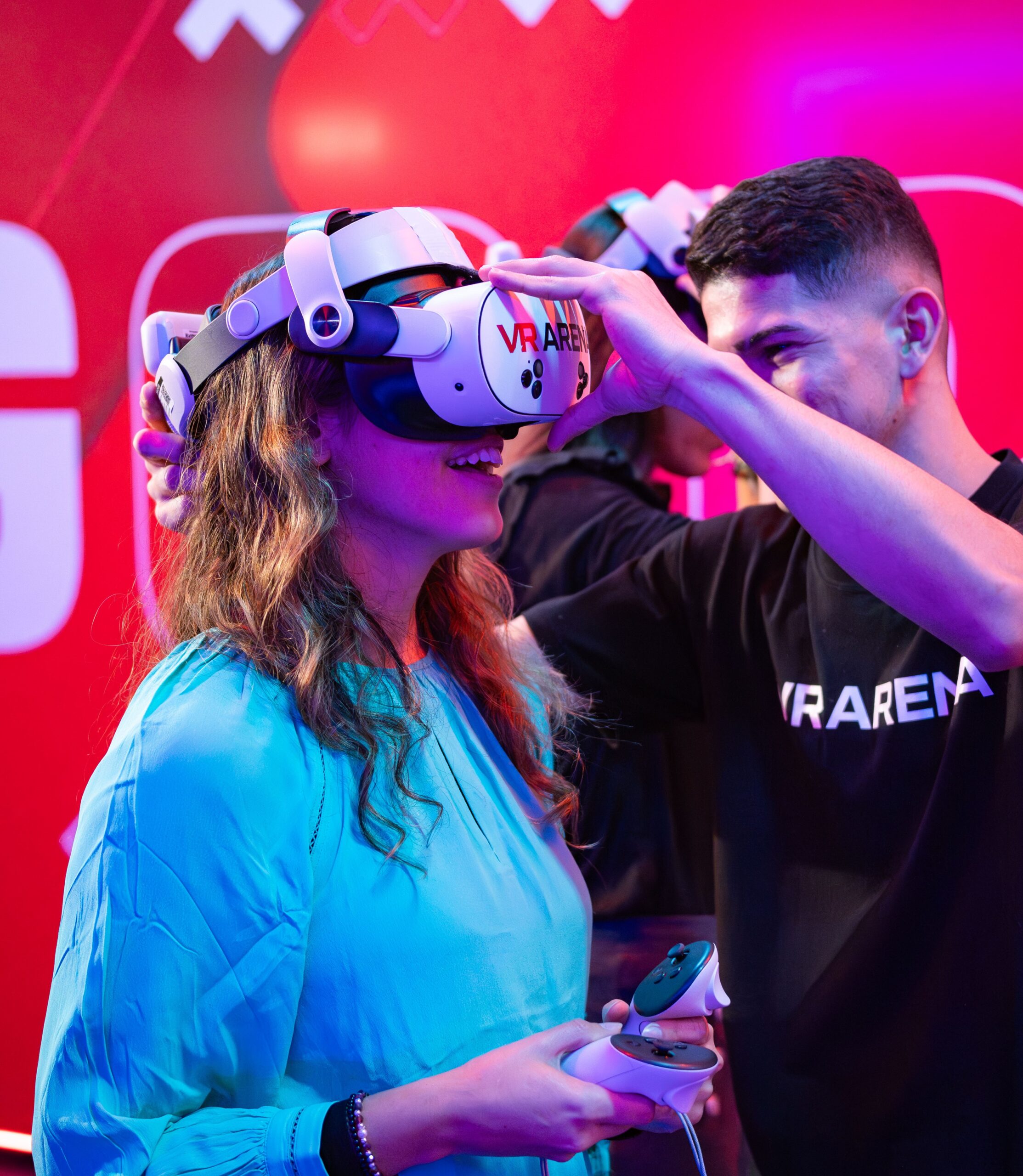
However, in 2026 opening a VR club under a franchise is often more reasonable than doing it independently. You enter the market faster and make fewer mistakes.
Put simply, a franchise serves as a “safety cushion” for your business. It’s no coincidence that Portal VR, Warpoint, Another World, and other market leaders are actively expanding through partner clubs—the model has proven its effectiveness. Many entrepreneurs who use a franchise reach a stable income of 1 million ₽ per month within a few months of operation—something that is difficult for independent clubs to achieve so quickly.
Conclusion
Is it worth opening a VR club in 2026? Absolutely—yes. This direction combines technology and entertainment trends, showing growth and strong demand. People are looking for new vivid emotions, and virtual reality can deliver them. Despite business challenges, a VR club with the right approach can pay back quickly and generate high profits. And if you don’t want to go into the unknown alone, opening a VR club under a franchise gives you a chance to start confidently and “on the shoulders of giants.” In 2026, this format looks optimal: you get both your own promising business and the support of an experienced team. As a result, the probability of success increases—exactly what the whole effort is for.
So if you’re choosing what business is profitable to open in 2026, take a closer look at virtual reality—the VR club niche may become your ticket to the future.

