

How to Choose a Location for Your Business: Typical Mistakes When Selecting a VR Location
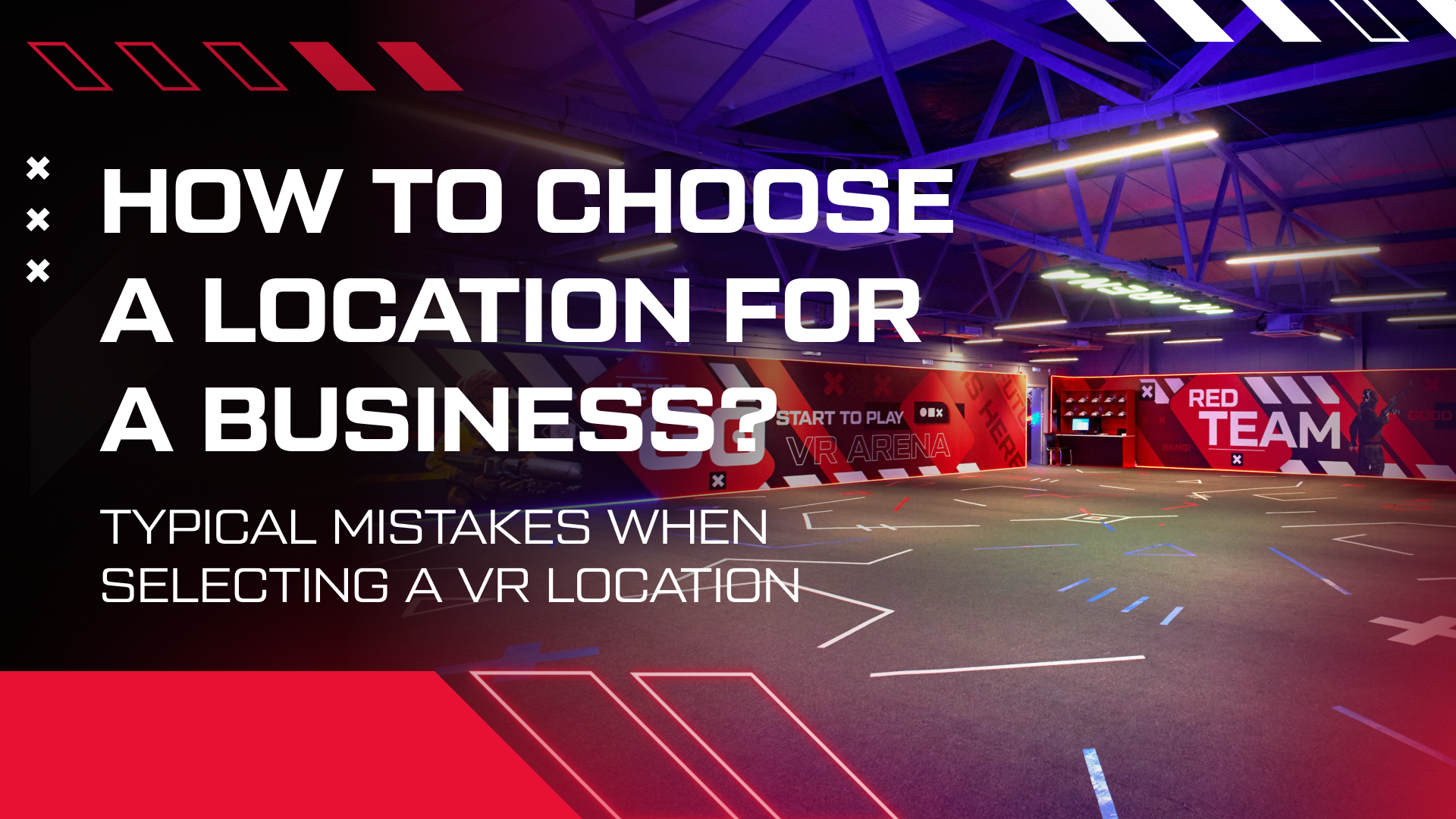
A well-chosen location for a virtual reality park is a key success factor for any VR business. A mistake at this stage can negate all your efforts and investments. In this article, we’ll examine the main criteria for selecting a venue and the most common mistakes you should avoid.
Budget and Fit-Out
Start by calculating the budget for opening a VR park. The minimum is about 3 million rubles: roughly half goes to equipment, the rest to fit-out and construction works. Renovation often eats up 60–70% of the investment. A common mistake is to spend almost all the money on renting an expensive space and leave nothing for its renovation.

Tip: plan a reserve for fit-out (at least 30% of the total budget) and immediately discard options that fall outside your real financial capacity.
Area and Competition
Even the best VR attraction will fail if it’s located “in the wrong place”. Study the area: check whether there are competitors nearby and how suitable the location is in general for leisure and entertainment.
If there are VR clubs or parks next door, you’ll have to share the audience – it’s better to look for a point without direct competitors. But a complete lack of entertainment infrastructure is also a red flag: there may simply be no demand there.
A common beginner mistake is opening a VR park “in the middle of nowhere”, where your audience is absent. The ideal scenario: a lively, busy area with no similar entertainment options – this way you occupy an open niche.
Shopping Mall or Standalone Location?
A frequent question: should you open in a shopping mall or on a high street / standalone building? A mall gives you a steady flow of visitors, but rent there is usually 1.5–2 times higher than in a separate unit. A standalone space is cheaper, but you’ll need marketing to drive traffic.

Key differences:
Footfall:
In a mall, you benefit from existing visitor flow (if you choose the right spot).
- Outside a mall, there are no random walk-ins – all clients come through your marketing.
Rent:
In a mall, rent is high – you pay for “traffic”.
Outside a mall, rent is usually significantly lower, which saves budget.
Conditions:
- In a mall, there is often basic fit-out already in place, but the mall sets the rules (opening hours, mandatory promotions, etc.).
- In a standalone location, the condition may vary (from fully ready space to “bare shell”), and lease terms depend on the landlord.
There is no universal answer to which option is better. The decision must be based on numbers. Renting outside a mall makes sense if the rent is significantly lower and the place is convenient for people. It may be worth fighting for an expensive unit in a top mall only if your calculations show a clear path to payback.
In any scenario, the location must be convenient for visitors: pay attention to transport accessibility and the availability of parking.
Space and Layout
A free-roam VR arena needs a spacious hall with the right shape. The recommended arena area is 150–300 m² (around 20 m² per player). A typical mistake is choosing a space that is too small or cut up by columns, where it’s impossible to run a comfortable game session. Ideally, the play area should be rectangular and free of unnecessary columns.
Think through zoning. Guests should not step directly onto the arena when they enter – you need an entrance area with a reception desk and a waiting zone.
❌ Bad: the guest opens the door and immediately ends up on the arena.
✔ Good: reception → lounge → game zone → arena.
Ideally, three walls of the arena should be solid (without through passages): this way you won’t lose space to corridors and will use the area as efficiently as possible.
Technical Requirements
Ideally, the space already has an even floor, basic interior finishing, and a working ventilation system with air conditioning – this speeds up the launch and lowers costs.
The availability of water supply (a “wet point”) increases comfort: a sink in the lounge allows guests to wash their hands or fruit. If there is no water, visitors will have to go to a shared restroom.
You also need a reliable internet connection (preferably from 100 Mbps): a weak connection risks game disruptions and delays with updates.
Before you send out a technical brief for zoning and layout, be sure to request:
fire escape plans,
allowed locations for the main entrance group,
restrictions on structural changes and re-planning.
Mistakes at this stage can cost you hundreds of thousands of rubles.
Lease Agreement: What to Pay Attention To

A seemingly promising space can turn into a trap if the lease agreement hides unfavourable conditions. Before signing, carefully review the key clauses:
Rent-free period.
Negotiate that no rent is charged during the first 1–2 months while renovation is in progress.Insurance and security deposit.
Requirements to insure the premises or pay a large deposit can significantly increase upfront costs. Discuss these conditions in advance.Utilities and operating expenses.
Clarify who pays for electricity, water, cleaning, security, marketing fees, waste removal, etc., and include these expenses in your financial plan.Restrictions.
Clarify operating hours, the ability to place outdoor signage, and fire safety requirements.
Tip: ask the landlord for a draft agreement and have it reviewed by a specialist. An experienced lawyer or franchisor will spot “red flags” and help adjust the terms before you invest.
Conclusion
Choosing a location for a VR business is one of the most critical decisions at launch. Don’t rush the process, but don’t miss a strong opportunity either.
Franchisees have an advantage: an experienced partner helps evaluate and plan the premises. The VR ARENA team gets involved in selecting the location even before the lease is signed, which reduces the risk of costly mistakes.
Approach location selection strategically: a well-balanced decision, backed by calculations and expert advice, will ensure your VR park has a steady flow of customers and stable profits for years to come.

